Bovine Ska and Rocksteady 4/15/2015: Slim Smith With The Techniques

This past week began a special series for the Bovine Ska and Rocksteady. After 4/29/2015, the Bovine Ska and Rocksteady will no longer be on WMBR because we are moving out of Boston. To commemorate the last three shows of the Bovine Ska and Rocksteady in Cambridge/Boston, we began a three episode spotlight on an artist dearest to our hearts, Keith “Slim” Smith.

The mission of the Bovine Ska and Rocksteady has always been to share and uncover rare Jamaican music. Consequently, these last shows will feature short record label spotlights for small labels in addition to the three part spotlight on a star who should be in the global company of Bob Marley and Jimmy Cliff but is not well known outside of Jamaica.

For the 4/15/2015 edition, we started the show with two sets of early reggae, featuring “Dengue Fever” from The Scorchers and the ever-too-pretty “If I Had the Right” from Alton Ellis. After the opening reggae sets, we presented mento from Jamaica’s hotel bands, specifically The Hiltonaires, the house band of Kingston’s Hilton Hotel, The Wrigglers, one of the bands for the Arawak Hotel, and Monty Reynolds and His Silver Seas Orchestra, the house band for the Silver Seas Hotel.

Then, to close the first hour, we presented a short label spotlight on a record label that we’ve wanted to review for sometime but had great difficulty in finding the tracks: the Moo’s label. We know that the man behind the Moo’s label was Charlie Moo, but beyond that, we don’t know much about the origins or the end of the label. The spotlight featured Jamaican Rhythm and Blues tracks from each of the artists from the small catalog of Moo’s label releases: Lloyd Clarke, Basil Gabbidon, Rico Rodriguez, Johnny Moore, Owen Gray and Clancy Eccles.

The second hour was dedicated entirely to the first part of the Slim Smith tribute trilogy: his time with The Techniques.

Techniques-Favorite

Our Selected Favorite from The Techniques


Slim Smith began his music career as a teenager attending Kingston Senior School. He along with classmates Frederick Waite, Franklyn White, the Richards Brothers, and Winston Riley entered Edward Seaga’s Chocomo Lawn youth club in Wellington Street in 1962 to emerge as the house band for the club with all members singing and playing instruments. After spending time backing up solo singers who visited the club and in concerts, Seaga arranged for The Techniques vocal group, now consisting of just Slim Smith on lead vocals, Winston Riley, Frederick Waite, and Franklyn White, to record on their own at Federal records with the track, “No One,” which was produced by Byron Lee and released on Kentone in 1963 to some attention but not too much. We heard this first track and another early Kentone track from the Techniques to kick off this spotlight on Slim Smith.

Everything began to change in 1964 for the Techniques. “No One” would be internationally distributed by Columbia in England in 1964 and by the Curtis Mayfield compiled This Real Jamaica Ska, which was released on Epic in America. Then, as the Victor Youths Band, Slim, Winston, Frederick, and Franklin were winners in the ska and mento contest in the 1964 Jamaica Festival. And, in that same year the Techniques were introduced to Duke Reid by Ken Boothe and Stranger Cole, and they would record, “Little Did You Know” with him, which would become the first major hit for the group. To kick off the spotlight, we presented The Techniques’ finest work with Duke Reid.

After their time with Duke Reid and his Treasure Isle, The Techniques then recorded with Sonia Pottinger at her Gayfeet label, which we presented next.

Often Generoso calls The Techniques the greatest vocal band in Jamaica, and this is because beyond Slim Smith, many of the members who rotated in then out of the group were stars in their own right. After Slim Smith left, the mighty Pat Kelly was brought in to take over lead vocals. Shortly after the arrival of Pat, Bruce Ruffin also joined the group, and this version of the Techniques was responsible for some of the best adaptations of tracks from Curtis Mayfield and The Impressions. In addition to these two talents, the Techniques would also have the voices of Junior Menz, Lloyd Parks, and Dave Barker during the group’s various re-incarnations.

Listen to The Techniques spotlight and the full show HERE.

The archive will be available until 4/28/2015. Enjoy!

And don’t worry, the Bovine Ska will return in another radio form. We’ll be sure to update here!

Bovine Ska and Rocksteady 4/8/2015: Horace Faith

For this past week’s show, we began with two sets of mid-tempo ska, beginning with a spectacular one from Henry Buckley himself on his own Merritone label entitled, “Reap What You Sew.” Afterwards, in the second set of ska, we presented the amazing “Run Rudies Run” from Lee Perry and the Gaylads.

After the first two sets, we jumped into the mento with “Tongue Tied Mopsie” from The Wrigglers on the Kalypso label. And then to transition into the spotlight on Horace Faith, we shared an extended set of rocksteady, beginning with a too cool Prince Buster track named “Sweet Beat.”

Cover for 7″ of Black Pearl

To start the second half of the show, we featured a memorial spotlight on Horace Faith, who passed away on March 8, 2015.

Unfortunately, we don’t know too much about Horace’s bio. We do know he was born as Horace Smith in Jamaica, but given his extensive recording for English labels and a small tidbit shared with us on an annotated episode of Top of the Pops, we know that he immigrated to England as a young man and spent a good chunk of his music career there.

Faith’s career is an interesting one; he recorded lots and lots of covers in reggae and soul but with very lush arrangements. We presented all of his best work in this memorial retrospective on Faith, including his major hit, “Black Pearl.”

“Black Pearl” is a cover of the song with the same title by Sonny & The Checkmates, and with this cover, Horace Faith gained quite a bit of popularity. It reached #13 on the U.S. Billboard top 100 and #13 on the UK singles chart as well.

The spotlight included both reggae and soul cuts from Horace Faith, all of which had beautiful and lavish compositions.

Listen to the spotlight and the full program HERE.

Enjoy! The archive will be available until 4/21/2015.

Bovine Ska and Rocksteady 4/1/2015: Early Clancy Eccles

For the 1001 episode of the Bovine Ska and Rocksteady, we kicked off the show with an amazing version-to-version-to-version-to-version excursion with the Satta Massa Ganna rhythm, beginning with the original recording of “Satta Massa Ganna” by The Abyssianians.

After that trip down version road, we presented some more reggae, including the chilling and stunning “Devil in Bed” from Cornell Campbell.

After those first two reggae sets, we played the mento set of the week, which included a beautiful one from Laurel Aitken entitled, “Nightfall in Zion.”

Then, in order to glide into the spotlight on Clancy Eccles’s early recordings, we shared a set of Jamaican rhythm and blues, which included “Since Lately,” a very early track from Jimmy Cliff, long before his days in “The Harder They Come.”

Clancy Eccles's Baby Please - Released in England on Island and in Jamaica on Moo's

Clancy Eccles’s Baby Please – Released in England on Island and in Jamaica on Moo’s

So, you may ask, why only the early Clancy Eccles tracks? In 1965, Clancy left the music industry as a performer and became a tailor and additionally a stage wear designer for Kes Chin, The Mighty Vikings, Byron Lee and the Dragonaires, Carlos Malcolm and The Blues Busters

Consequently, in the spotlight, you will only hear the songs he recorded before he took his two year hiatus from recording and before he returned to the music industry in 1967 when he would record again and produce other artists.

Born in Saint Mary parish in 1940 to a tailor and builder, Clancy Eccles began his love for music in the church. Particularly inspired by his uncle who was a spiritual revivalist, Eccles began singing at church as a boy. As a teenager, he moved to secular music, singing to tourists in the hotel circuit on the Northern Coast of Jamaica. Then, as a young man, he moved to Ocho Rios and performed in nighttime shows where he shared stages with the Blues Busters, Higgs & Wilson, and Buster Brown.

After working the live performance circuit for a few years, Clancy decided to move to Kingston in 1959 where the recording industry was beginning to rise, and eventually, he began working with Coxone Dodd. He first recorded Freedom for Coxone, which was a single played on his sound system before it was pressed for distribution. As a political song discussing repatriation to Africa, Freedom was actually one of the earliest songs to be used in a political campaign; Alexander Bustamente used it in his battle against the Federation of the West Indies in 1960.

You’ll hear Freedom to kick off the spotlight on Clancy Eccles’ early recordings.

By 1962, Clancy began running his own talent shows and producing live shows for artists such as The Clarendonians and The Wailers. The next year, Clancy began working with other producers including Charlie Moo and Lyndon Pottinger. You’ll hear his work from these producers in the second part of the spotlight.

Happy April! Hope you enjoy the show!

Listen to this episode HERE

The archive link will be available until 4/14/2015.


Bovine Ska and Rocksteady 3/18/2015: Joe Higgs

In this week’s edition of the Bovine Ska and Rocksteady, we kicked off the show with early reggae with Bob Andy’s beautiful “Unchained” as part of the show’s dedication to Bob Andy, who was stabbed in a robbery on 3/13/2015. Thankfully, his injuries were not fatal, and he is recovering and healing.

In the second set of reggae, we heard a version-to-version of Shenley Duffus & The Upsetters cover of The Moonglows’ “Sincerely.” A hit on the U.S. Billboard R&B charts for Chess records, “Sincerely” gets a great treatment in reggae for Lion records. For the mento set this week, we were thrilled to share “De Buggy Bruck” from Louise Bennett’s album “Listen to Louise,” a new record discovered over the weekend.

Before the spotlight on Joe Higgs, we focused on some ska gems before beginning the spotlight. In this ska set, we featured “Fire” from The Leaders, a trio long overdue for a spotlight on the BSR given that the group consisted of superstars Joe White, Roy Shirley, and Ken Boothe.

Joe Higgs’ The World Is Upside Down from 1971

After the set of ska, to kick off the spotlight on Joe Higgs, we presented his early solo recordings for Coxone’s Studio One.

Joe Higgs began his music career with Roy Wilson in the duo Higgs &Wilson. The two lived on the same street and actually met and began their collaboration at a contest where eight solo contestants were to be selected from ten to move to the next round, but the promoter could not narrow the group down, so he asked Higgs & Wilson to compete as a duo. Together, Higgs & Wilson reached great popularity early, with their first single, “Manny Oh,” a production from Edward Seaga that sold 50,000 copies. Consequently, as a musician of note early in the Jamaican music scene, Higgs attracted a group of young musicians in his yard in Trenchtown, whom he mentored and taught. One of those musicians was Bob Marley and two others were Bunny Livingston and Peter Tosh. Beyond his teaching, Joe Higgs continued to perform with Roy Wilson and saw additional success with Coxone Dodd, who Higgs would continue to work with during his solo recordings after Roy Wilson emigrated from Jamaica to America in 1964.

As part of a well known Jamaican duo, Higgs took a break from recording after working with Coxone as a soloist and performed as a guest vocalist for both Carlos Malcolm and Lyn Taitt’s groups on the hotel circuit. When he returned to recording, Higgs worked with a variety of producers, including Harry J and Rupie Edwards, who he recorded some of his finest solo records with. These were the tracks of the second set in the spotlight.

Higgs also had his own label, Elevation, which he named after his own ability to elevate himself from a dark and hard world. From the Elevation label, we shared “Let Us Do Something,” a release that was as DIY as can be. Joe recorded multiple parts on the track, including guitar, in addition to singing. He also completed the lettering on the label by hand.

In 1972, Higg’s song, “Invitation to Jamaica” won the Jamaica Tourist Board Song competition, which allowed his to tour the U.S. and also brought him further popularity, so much so that Chris Blackwell planned on releasing Higgs’ debut  LP for Island Records that same year. This LP was “Life of Contradiction.” Blackwell did not release the LP because he felt it would be too difficult to market, but it was eventually released by Pete Weston’s Micron Music in 1975, and thankfully so because the songs on this record have amazing layers of rich sounds.

“Mademoiselle” rounded off our spotlight on Joe Higgs as our favorite of his recordings.

We hope you enjoy this show!

Listen to the archive HERE.

The archive will be available until 3/31/2015.

Stay tuned for the show on 3/25/2015. It will be a celebration of the 1000th edition of the Bovine Ska and Rocksteady!!!


Bovine Ska and Rocksteady 3/11/15: Horace Andy

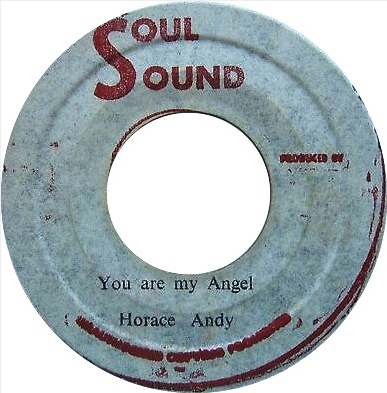
horace andy-you are my angel

Horace Andy on Soul Sound in 1972


We started off this past week’s Bovine Ska and Rocksteady with a Derrick and Patsy cover of a song that might go down as one of the most influential in Jamaican music history.  “Let The Good Times Roll” which was a huge hit for Shirley and Lee not only only in the States but in the early days of the Jamaican sound system.  So popular was this cut and Shirley’s childlike vocals that it inspired a generation of Jamaican female vocalists like Millie Small, and Millicent “Patsy” Todd who does a fine job on this cover.  It was followed by seven songs from the Jamaican Rhythm and Blues period including Bobby Aitken’s 1962 cut for the Blues Label, “Hello” and the Blues Busters “Lost My Baby” a beautiful side on the Starlite label in 1992 as well.  And after a set of mento and a pretty set of rocksteady that began with a rare one from Prince Buster from 1967 called “This Gun For Hire!”  We then started a long overdue spotlight of Horace Andy.

Born as Horace Keith Hinds, Horace Andy was born in Kingston in 1951. The cousin of Justin Hinds, he also had a very distinctive voice, so in order to delineate himself from his cousin, Coxone Dodd actually picked a different stage name for him. At the time of Horace’s arrival to the music scene in Kingston, Bob Andy’s career was rising, so Coxone gave Horace the same surname to gain some of the fame coming from Bob. Despite the similar name and the songwriting talent, Horace’s voice however was so different so that when he auditioned for Coxone at Studio One, the producer and label in which he would spend a large chunk of his career, he recalls all of the session musicians at the time dropping their instruments and laughing. Despite the reaction of Studio One’s musicians, another producer had actually heard and taken a chance on Horace Andy first. He actually began his music career with a producer very much adored on the BSR, Phil Pratt. We started with Black Man’s Country, his first recording, which was released on Caltone to kick off this spotlight.

Black Man’s Country did not see too much success, and consequently, Horace ended up at Studio One, where he would gain much of his popularity. His first single for Studio One “Got to Be Sure” was actually the song he auditioned on to the uproarious laughter of the session crew. And at Studio One, Horace would also record his highly regarded LP Skylarking. We heard his debut single for Studio One first and then some highlights from Skylarking next. As a child, Horace spent a lot of time in the library reading, which would end up influencing his songwriting.  A few notes on some of his finest tracks:

Every Tongue Shall Tell: Yes. Well for some Christian minded people and Rasta people it means any wrong you do you are going to have to talk when the time comes. Because that’s what they say the King James Version tells us. That’s what the Bible says and you must live by what the Bible says. But you know the people are not doing it. They only talk it. But that is the reason why [I sang it] because of the inspiration of the Bible. It was before I was even born – “Every tongue shall tell” that means everyone shall confess their wrongs when the right time comes.

See A Man’s Face Inspiration: See A Man was something that happened a long time ago. You see, when you speak the truth no one believes you. I learned that a long, long time ago. Even when you tell your mum “Mum, it’s not me do it” you get bap bap “A you do it!” That’s why more time you have to be close to the kids them and believe them when they tell you things. So I know from a long time ago that no one believes the truth when you talk the truth. That’s why I wrote that song. And because a young man broke my little sister’s heart. It had so much meaning that he broke my little sister’s heart and that’s why I wrote that song then.

You Are My Angel Inspiration: No. Those things just came natural. We love the woman and we look upon her as the mother of the earth. She multiplies and she creates so the father says life. Life is so important so we have to love and respect the woman. Don’t kick them, don’t box them, don’t rape them – no no no. I say it on stage and the ladies scream “We love you Horace!” You are my angel is the original source for the Massive Attack track Angel that Horace collaborated with them on

Money The Root of All Evil:Because I saw it. As a young man growing up I saw it. Because money, wow, it has its good and it has its bad. And because producers weren’t paying me – that’s why I wrote that song.

We hope you enjoy the show!  Love from Lily and Generoso

You can here the entire program: HERE

The archive of this show will be available until 3/25/15


Bovine Ska and Rocksteady 3/4/15: Derrick Harriott’s Crystal Label

crystal B

The Jiving Juniors On The Crystal Label

This week was a special two hour retrospective of Derrick Harriott’s Crystal/Move and Groove Labels.

Born in Kingston in 1939, Derrick Harriott was the youngest of 5 children. At a very young age, he sang in church, and eventually, his singing and performing would accelerate when he went to school. Derrick Harriott began his music career with his friend Claude Sang Jr with the duo, Sang and Harriott. The two attended Excelsior High School together, and in school, they would practice together and perform, wooing their schoolmates with their music, and in turn, their schoolmates encouraged the duo to enter the Vere Johns Opportunity Hour talent show in 1955. The two did not make the final round this initial time, but they would win it in 1957 and at a minimum manage to be in the finals after their first win.  Despite their popularity in the live performance circuit, Sang and Harriott broke up when Sang left Jamaica for schooling. In 1958, Harriot formed the Jiving Juniors with Eugene Dwyer (bass), Maurice Wynter (Tenor), Claude’s younger brother, Herman Sang on piano, and Harriott on lead tenor and falsetto. The Jiving Juniors gained quite a bit of fame with successful performances on the Vere Johns Opportunity Hour, so successful in fact that they earned a special spot on the show.

We started this two hour spotlight on The Crystal Label by playing four tracks from Derrick Harriott and the Jiving Juniors. The Crystal label, which was named supposedly because of “a fortune teller with a crystal ball… and crystal means very clear”  Here, at the Crystal label, he would first release his own solo tracks, but he quickly began to record other artists. We also played one excellent solo track from Derrick, and then his early recordings for the Crystal label with other artists in ska such as Roy Panton and Don Levy.

Very early in the label’s career, Derrick had a great eye and ear for talent, being one of the first to record many singers. Keith and Tex started with him, and they also helped recruit some talent over to Derrick, including who you just heard from, Rudy Mills, who was Keith Rowe’s cousin’s husband, and Keith brought Rudy over to Crystal to first record.

Backing up the vocal artists and recording a many instrumentals of their own, were The Crystalites, Derrick’s house band, which had a rotating line up, but Derrick selected from an amazing pool of session musicians including: Barry Biggs, Bongo Herman, Gladstone Anderson, Jackie Jackson, Larry McDonald, Lynford Brown, Paul Douglas, Wallace Wilson, Winston Wright.

By 1970, Derrick had really built up a reputation as a strong producer, so much so that his output that year would gain him the title of the best producer of 1970 by Swing magazine.  We then played The Ethiopians No Baptism next, which was a highlight from a great year of productions and a hit for the Crystal label. As mentioned before, Keith and Tex got their start with Derrick Harriott and gained quite a lot of fame with him, who in addition to singing their tracks for him, they also sang harmony for other Derrick Harriott productions. Stop That Train was an enormous hit for them, so much so that other DJs who came to the Crystal label would toast on them.

One story has Derrick who had heard people talking about Big Youth, going out and searching for him in order to record him. Big Youth would actually end up using his promotional picture on the Those Reggae Oldies album released on the Crystal label for the artwork on his own Negusa Nagast label

Another DJ that had success on Crystal was Scotty,  born David Scott, originally started singing with Valman Smykle and  Franklin Spence in the rocksteady group, The Federals, but he would come into his greatest prominence as a DJ/toaster for Derrick Harriott’s Crystal label. He would toast on versions of early hits from the Crystal label, like the version of Stop that Train heard in the first hour of the show. Now then played another version to version. We then heard Scotty toasts over his boss’s hit “The Loser.” Scotty was given the full LP treatment by Derrick on the Crytal label in 1971 with a collection of his best toasting on the album School Days.

In 1966, Derrick opened up Derrick’s One Stop record shop on 125 King Street, making him one of few singers who produced, ran his own label and his own record shop. The name One Stop was perfect because up and coming artists could go to the shop to pitch music to Derrick, and he could record them and sell the record in his own shop. In addition, visitors to the shop were attracted to the big hits on other labels in stock, but given that they stepped into Derrick’s shop, they could also gain more exposure to the Crystal label releases than they would in other record shops in Kingston. This record shop extension of Derrick Harriott’s work would help further Derrick’s success as more and more hits were released on the his labels.

You can here the entire program: HERE

The archive of this show will be available until 3/18/15


Bovine Ska and Rocksteady 2/25/15: Roy and Millie

Roy and Millie Starlite

The Wonderful Vocals of Roy and Millie from 1963 on WIRL

This was a fun show and we were more than thrilled to send it out to all of you.  Starting off with a deep cut from the late sister of Alton Ellis, Hortense Ellis gave us the superb 1970 track, “Love Is The Key.” We continues with two full sets of early fast reggae ending with Gladdy Anderson’s 1969 vocal cut for Duke Reid, “Dollars and Cents,” which was released in England on the might Trojan label. As this week was without major snow for the first time all month, we felt the need to have a joyous spotlight in the form of a Roy and Millie spotlight.

Born in Clarendon, Jamaica to a sugar plantation overseer, Millie Small began her music career on the Vere Johns Opportunity Hour. After winning the contest, Millie decided to move to Kingston for a greater opportunity to record and perform. As a young teenager, she first recorded Sugar Plum at Studio One with Owen Gray in 1962, which Roy Panton harmonized with her on because Coxone Dodd wanted a stronger voice on her part because Millie’s voice was much higher than other female voices. And after that initial collaboration, Coxone, seeing the success of the male-female duo through Derrick and Patsy, he suggested Roy and Millie sing as a duo, which was a good instinct; they would see so much local success and popularity together that Millie would eventually capture the attention of Chris Blackwell, who led her to her mega hit in England, My Boy Lollipop. We begun this spotlight on Roy and Millie, starting off with their first recording as a duo together, “We’ll Meet,” which was a debut hit for them that rose to the top ten of the Jamaican charts in 1962.

They would record many times afterwards Roy Panton would continue his recording career as a solo artist and with Yvonne Adams (Harrison) and they still perform to this day. Sadly, the whereabouts of Millie Small are unknown.  We know that she emigrated to England and has a daughter but little else is known. In 2011, Millie was awarded the Order of Distinction in Jamaica but the former Prime Minister, Edward Seaga, excepted it for her in her absence.

Listen to the full program: HERE.

Enjoy! The archive will be available until 3/9/2015


Bovine Ska and Rocksteady 2/11/15: The 19th Annual Anti-Valentine’s Day Show

$(KGrHqNHJEgE8oY,psQNBPU2M-Srwg~~60_12

A great sad cut by the late Freddie McKay

OK, I assume that after reading the title of this post, you completely understand where we are coming from with this special edition of The Bovine Ska and Rocksteady. People for varying reasons hate this holiday so we should give you ours: it is the greatest relationship destroying holiday of all time! Unlike other relationship crushing holidays like Christmas, Valentine’s Day sets itself apart in the area of emotional (and sometimes materialistic) expectations.  What to give and plan if the relationship is just a few weeks old could result in an a cataclysmic outcome.  So, what does this have to do with Jamaican music?  Well, like any songwriters and performers of ska, rocksteady and reggae are not exempt from the tortures of love gone awry and this show was packed with their miseries.

Our show began with an hour long tribute to the concept of loneliness featuring such tracks as: “I’ve Been Lonely” by Peter Tosh and Hortense Ellis (Studio One-1966) and “Sometimes I’m Lonely” by The Pioneers (Trojan-1972).  Followed by a second hour which featured tributes to “Tears” and “Sadness” featuring cuts like Errol English’s “Sad Girl” (Torpedo-1972) and “Tears From My Eyes” by the great Jackie Opel (Top Deck-1965).  Each break punctuated by our Anti-Valentine’s Day theme of “He/She Left Me for What?”  Real life excuses, read by Lily, written by couple who broke up over the most trivial of reasons.

Listen to the full program: HERE.

Enjoy! The archive will be available until 2/24/2015

Bovine Ska and Rocksteady 2/4/15: Bobby Aitken

Bobby Aitken photo

Our spotlight artist Bobby Aitken 

Coming to you from a frozen, snow-covered Cambridge, it’s the Bovine Ska and Rocksteady!  Wow, these last few weeks have been rough with bad weather.  We are also back this week, after missing last week’s show due to Generoso’s hospital stay.  He’s improving but that combined with the snow has made doing the show difficult but we were glad to be back.   Starting the show off this week were two sets of delicious early reggae, beginning with a massive tune from Sound Dimension, “Great Mu Gu Ra Ga” which was released on Bamboo in the UK in 1970.  Our spotlight would be on the early vocal tracks of Bobby Aitken.

Brother of the godfather of ska, Laurel Aitken, Bobby Aitken, was born in Havana in 1933 and was orphaned in Jamaica at the age of eight. As a boy, he became a mason when his uncle pulled him away from a street gang and introduced him to the masonry trade in order to survive on his own. However, music became a more reasonable means for Bobby, especially seeing that he had a natural gift for it. A precocious 11 year old Bobby built his first banjo from sardine cans and learned how to play guitar on his own. And, by his mid-20s, Bobby had built up his guitar skills and formed the Carib Beats with Charlie Organaire and a man named Morgan in late 1959/early 1960. Together, the group performed primarily calpyso with a few skas, but the trio broke up after the rest of the group did not show up for a performance at the Blue Ribbon Club in Kingston.  As a result, Bobby returned to masonry for a stint, only to make a comeback to music within a year as a solo artist with his single, Cracker’s Rush, which commented on a food shortage in Jamaica and was released in 1961 on the Blues label by Count P, an operator of a soundsystem on Spanishtown Road. We’ll began with this first solo recording of Bobby Aitken to kickoff tonight’s spotlight.

Eventually, after recording for a range of producers including Prince Buster, Coxone Dodd, Linden Pottinger, and King Edwards, Bobby Aitken formed The Carib Beats again with Charlie Organaire and Mike Williams. Other musicians including Bobby Kalphat, Vincent White, Conroy Cooper, Ansel Collins, Carlton Santa Davis, and Val Bennet would also rotate in and out of the group. The Carib Beats recorded for Joe Gibbs, Clancey Eccles, Bunny Lee, and most famously, JJ Johnson.  The second incarnation of The Carib Beats would eventually break up as Bobby decided to focus more on his faith and became who he is known as today: the Reverend Robert Simmonds.

Listen to the full program with our Bobby Aitken spotlight: HERE.

Enjoy! The archive will be available until 2/17/2015 

Bovine Ska and Rocksteady 1/14/2015: King Sporty

Prior to the preparation for this week’s show, we were informed of the sad news of King Sporty’s passing. Consequently, this past week’s show featured a memorial on the great DJ who would emerge as an amazing songwriter and producer.

To begin the show, we began with two sets of rocksteady, including never-before-played tracks from The Merritone Singers and Victor Morris. We then heard mento from Count Owen, Lord Foodos, and Charlie Binger prior to a set of ska to precede King Sporty’s early ska toasting tracks.

R-2265428-1273249302.jpeg

King Sporty’s Self-Produced Single Yearfull of Sundays

King Sporty passed at the age of 71 in Miami on January 5th. Born as Noel G. Williams, King Sporty began his career in Jamaican music as one of Coxone Dodd’s DJs for his soundsystem. In Jamaica, King Sporty would record for Coxone and for Justin Yap prior to his move to Miami in 1968.

Upon his move and work in America, King Sporty would transition his writing and production into soul and disco. However,we will focus this spotlight on King Sporty’s own tracks in ska and reggae before he gained popularity in the world music arena. We will pay honor to the great talents of King Sporty in an one hour tribute of his best DJ recordings, beginning with his first vocal toasting track in ska named El Cid, which was released on Justin Yap’s Top Deck label.

Even though the memorial spotlight focuses on his own recordings, King Sporty was not only a phenomenal DJ and producer but also a talented songwriter. He penned many hits for Studio One and such well known tracks as the Blues Busters, “Thinking of You” and a song that he originally recorded that Bob Marley made globally famous, “Buffalo Soldier.”

In Miami, King Sporty opened up his labels, Tashamba and Konduko, allowing him to write, produce, and release his own recordings and those of artists he liked. During this time in Miami, King Sporty would become very close to the Miami soul scene, distributing records from his label through Henry Stone, the king of the Miami’s T.K. Records. Sporty also married Betty Wright, T.K. Records’ leading soul lady.

One of the tracks that King Sporty sold to Henry Stone was one from Lily’s favorite Glades/T.K. Records artists, Timmy Thomas. In fact, King Sporty had discovered Timmy Thomas’s “Why Can’t We Live Together” and brought the track to Henry Stone’s door. Stone purchased it from Sporty immediately and pressed it on his Glades label in 1972. The Timmy Thomas track gained traction on the American charts, and this would be one of King Sporty’s most successful discoveries within the Miami soul world.

Listen to the full program with King Sporty’s stellar recordings in ska, reggae, and even soul HERE.

Enjoy! The archive will be available until 1/27/2015.